

I'd rather be a forest than a street

there is a family of cardinals in my backyard with a unique birdcall, compared to the usual chitter chatter among the wildlife in the city here. sparrows are common, starlings, sometimes robins, woodpeckers, but my favourite so far are the cardinals, who visit only for a few minutes and then, red feathers flashing, flit back through the trees to where they came from. they come and leave so fast i can never get a good photo of them!


Either peace or happiness,
let it enfold you
when I was a young man
I felt these things were
dumb, unsophisticated.
I had bad blood, a twisted
mind, a precarious
upbringing.
I was hard as granite, I
leered at the
sun.
I trusted no man and
especially no
woman.
I was living a hell in
small rooms, I broke
things, smashed things,
walked through glass,
cursed.
I challenged everything,
was continually being
evicted, jailed, in and
out of fights, in and out
of my mind.
women were something
to screw and rail
at, I had no male
friends,
I changed jobs and
cities, I hated holidays,
babies, history,
newspapers, museums,
grandmothers,
marriage, movies,
spiders, garbagemen,
english accents,spain,
france,italy,walnuts and
the color
orange.
algebra angred me,
opera sickened me,
charlie chaplin was a
fake
and flowers were for
pansies.
peace and happiness to me
were signs of
inferiority,
tenants of the weak
and
addled
mind.
but as I went on with
my alley fights,
my suicidal years,
my passage through
any number of
women-it gradually
began to occur to
me
that I wasn’t different
from the
others, I was the same,
they were all fulsome
with hatred,
glossed over with petty
grievances,
the men I fought in
alleys had hearts of stone.
everybody was nudging,
inching, cheating for
some insignificant
advantage,
the lie was the
weapon and the
plot was
empty,
darkness was the
dictator.
cautiously, I allowed
myself to feel good
at times.
I found moments of
peace in cheap
rooms
just staring at the
knobs of some
dresser
or listening to the
rain in the
dark.
the less I needed
the better I
felt.
maybe the other life had worn me
down.
I no longer found
glamour
in topping somebody
in conversation.
or in mounting the
body of some poor
drunken female
whose life had
slipped away into
sorrow.
I could never accept
life as it was,
i could never gobble
down all its
poisons
but there were parts,
tenuous magic parts
open for the
asking.
I re formulated
I don’t know when,
date, time, all
that
but the change
occurred.
something in me
relaxed, smoothed
out.
i no longer had to
prove that I was a
man,
I didn’t have to prove
anything.
I began to see things:
coffee cups lined up
behind a counter in a
cafe.
or a dog walking along
a sidewalk.
or the way the mouse
on my dresser top
stopped there
with its body,
its ears,
its nose,
it was fixed,
a bit of life
caught within itself
and its eyes looked
at me
and they were
beautiful.
then- it was
gone.
I began to feel good,
I began to feel good
in the worst situations
and there were plenty
of those.
like say, the boss
behind his desk,
he is going to have
to fire me.
I’ve missed too many
days.
he is dressed in a
suit, necktie, glasses,
he says, ‘I am going
to have to let you go’
‘it’s all right’ I tell
him.
He must do what he
must do, he has a
wife, a house, children,
expenses, most probably
a girlfriend.
I am sorry for him
he is caught.
I walk onto the blazing
sunshine.
the whole day is
mine
temporarily,
anyhow.
(the whole world is at the
throat of the world,
everybody feels angry,
short-changed, cheated,
everybody is despondent,
disillusioned)
I welcomed shots of
peace, tattered shards of
happiness.
I embraced that stuff
like the hottest number,
like high heels, breasts,
singing,the
works.
(don’t get me wrong,
there is such a thing as cockeyed optimism
that overlooks all
basic problems just for
the sake of
itself-
this is a shield and a
sickness.)
The knife got near my
throat again,
I almost turned on the
gas
again
but when the good
moments arrived
again
I didn’t fight them off
like an alley
adversary.
I let them take me,
I luxuriated in them,
I made them welcome
home.
I even looked into
the mirror
once having thought
myself to be
ugly,
I now liked what
I saw, almost
handsome, yes,
a bit ripped and
ragged,
scares, lumps,
odd turns,
but all in all,
not too bad,
almost handsome,
better at least than
some of those movie
star faces
like the cheeks of
a baby’s
butt.
and finally I discovered
real feelings of
others,
unheralded,
like lately,
like this morning,
as I was leaving,
for the track,
i saw my wife in bed,
just the
shape of
her head there
(not forgetting
centuries of the living
and the dead and
the dying,
the pyramids,
Mozart dead
but his music still
there in the
room, weeds growing,
the earth turning,
the tote board waiting for
me)
I saw the shape of my
wife’s head,
she so still,
I ached for her life,
just being there
under the
covers.
I kissed her in the
forehead,
got down the stairway,
got outside,
got into my marvelous
car,
fixed the seatbelt,
backed out the
drive.
feeling warm to
the fingertips,
down to my
foot on the gas
pedal,
I entered the world
once
more,
drove down the
hill
past the houses
full and empty
of
people,
I saw the mailman,
honked,
he waved
back
at me








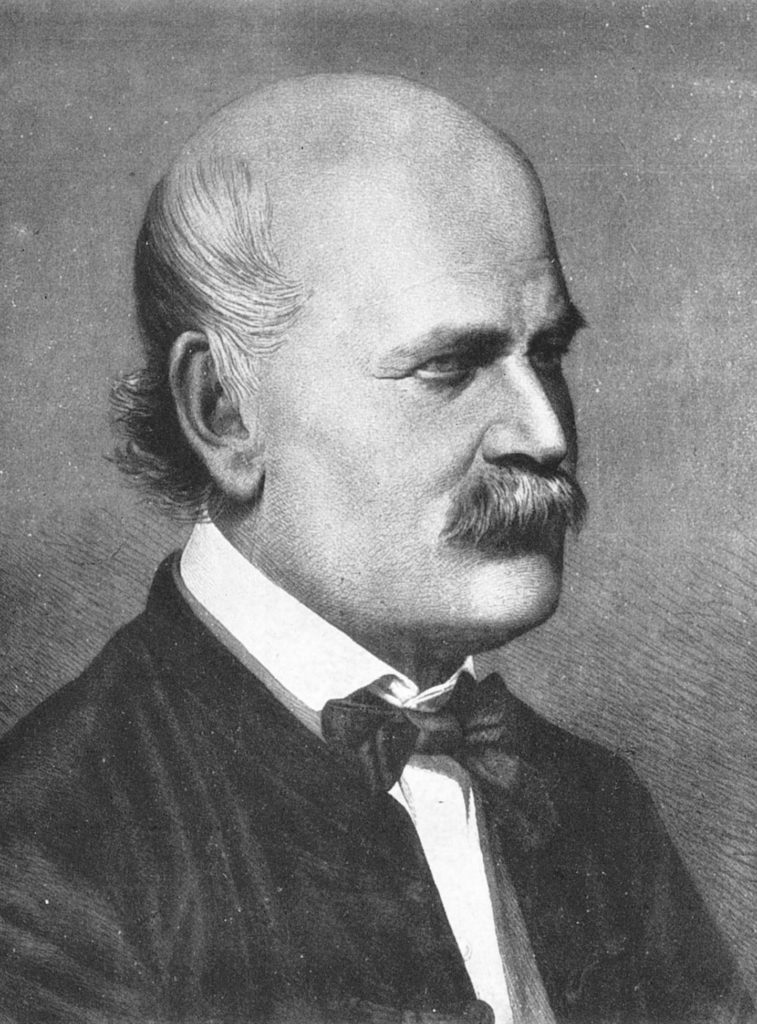
Another contemporary who suffered for his medical beliefs would not be so fortunate (as French experimentalist Claude Bernard). The Hungarian-born German Ignaz Semmelweis would make just one major discovery, and its effect would eventually transform the hospitals of the world, saving innumerable lives; though his advocacy of this discovery would be the ruin of his career, and almost certainly cost him his life.
In 1847 Semmelweis was working as a teaching assistant at the maternity clinic in the Vienna General Hospital, which was at the time the largest clinic of its kind in the world. Yet, like such clinics all over Europe it was beset by an appalling mortality rate. Puerperal fever (which attacked women after they had given birth) had reached epidemic proportions, and even some of the finest European clinics occasionally reported mortality rates over 50 percent. The fever was accompanied by a puzzling range of symptoms, which could vary from skin eruptions filled with pus to peritonitis (resulting in serious abdominal swelling), from highly malodorous vaginal discharges to pleuritis (damaging the lungs and bringing severe breathing difficulties). It was always extremely painful, and few survived its onslaught for long. Such was the variety of symptoms that some considered ‘puerperal fever’ to be no more than a blanket term for a number of similar post-natal diseases.
The Vienna General Hospital had two large maternity sections. The first was used for training medical students in obstetrics, while the second was used for training midwives. Semmelweis was surprised to note that whereas the mortality rate in the first section was 13 percent (sometimes rising to 30 percent), the rate in the second section remained around 2 percent. There were a number of myths accounting for this discrepancy. The women who came to give birth in the Vienna General were for the most part poor single mothers and prostitutes, who had nowhere else to turn. For such people, death was regarded as a punishment by God. The lower mortality rate in the midwives’ section was put down to the fact that the patients felt less humiliated when they were treated by women. Pregnant women entering the clinic would tearfully plead to be allowed into the midwives’ section, which had certain feminine touches such as a few jars containing flowers. It was also kept marginally cleaner than the medical students’ section – though cleanliness was not a major concern in the maternity clinic. Vienna was by now a rapidly expanding commercial city, with a proliferation of factory suburbs where the slum districts housing the poor were notoriously filthy, as were the people who inhabited them. It was felt that there was little point in having clean hospitals to tend for such people, who invariably brought in their own dirt.
Semmelweis would conduct autopsies on the puerperal fever victims, and he soon became convinced that this was in fact a single disease despite its varying symptoms. Around this time his colleague Jakob Kolletschka, who was a professor of forensics (criminal medical investigation), died after cutting his finger during a post-mortem examination of a cadaver. The consequent autopsy revealed that Kolletschka had what appeared to be symptoms of puerperal fever. Yet how could this have happened? Kolletschka had no contact whatsoever with the maternity clinic. In Semmelweis’s words: ‘Day and night the image of Kolletschka’s illness pursued me. As we found identical changes in his body and those of childbed women, it can be concluded that Kolletschka died of the same disease.’ Yet Semmelweis remained unable to provide an explanation for this.
Some time later, Semmelweis noticed that the medical students entering their section of the maternity clinic often came directly from their practical anatomy classes, which included post-mortem dissection and the actual handling of diseased organs. When they were finished with their dissection classes, their hands would frequently be wet with blood or pus, yet all they did was douse them under a tap and wipe them on their aprons. Many did not even bother to do that. The cadaver smell on a student’s hands was regarded as a mark of distinction. This distinguished the future physicians in the students’ maternity section from those who were merely studying obstetrics.
Semmelweis drew a simple conclusion. The students from the anatomy labs came into the maternity clinic bringing ‘invisible cadaver particles’. These were what had infected the cut in Kolletschka’s finger, and these were what infected the post-natal patients with puerperal fever. Immediately after birth the uterus was in a raw condition similar to an extensive wound, and could easily become infected by any decomposing organic material. A conducive environment for the foetus was transformed into a conducive environment for infection.
Semmelweis issued orders that from now on before entering the maternity clinic all students should wash and scrub their hands in a chlorine solution until the cadaver smell had been completely eliminated. The results were immediate and spectacular. In the following month the mortality rate in the medical students’ section of the maternity clinic fell to just 2 percent, the same as in the midwives’ section.
Yet Semmelweis was hardly prepared for the reaction which followed. The students were indignantly opposed to having to wash their hands. Semmelweis’s immediately superior Professor Johann Klein was even more opposed to the measures, which he considered to be an underhand criticism of his running of the maternity clinic. And it soon became clear that the women patients too were opposed to it: they saw such measures as implying that they were dirty. Even Semmelweis himself was far from pleased at what he had discovered. As he wrote dejectedly, ‘God only knows the number of women I consigned prematurely to the grave.’ He felt himself to be little better than a murderer.
Semmelweis found himself becoming increasingly unpopular at the Vienna General Hospital; and when his post came up for renewal, Klein refused to reappoint him. Several colleagues were sympathetic towards Semmelweis, and obtained work for him elsewhere. In the close-knit professional world of Viennese medicine this was not easy, and in going against the powerful Klein they were jeopardizing their own careers. Suddenly Semmelweis decided that he had put up with enough, and without telling anyone he simply packed up and caught the train home to Budapest. This precipitate action succeeded in alienating him from his few remaining friends.
Back in Budapest Semmelweis eventually obtained a post in the medical department of St Rochus, a large city hospital. This post was unpaid, but he gradually managed to build up a fairly lucrative private practice. He soon implemented his new hygienic methods in the maternity clinic, and here too the high death rate in the wards diminished spectacularly. But even when Semmelweis published a paper on his discovery some years later in a Hungarian medical journal, he continued to be ignored. No one outside Hungary read Hungarian medical journals.
In time, Semmelweis would become professor of obstetrics at the University of Pest (across from the Danube from the twin municipality of Buda). Despite such professional recognition in his home country, he was becoming increasingly frustrated by the reception of his great idea abroad. Plagued alternately by his guilt at having earlier been responsible for so many deaths, and by his defiance in the face of international neglect of his ideas, he began to show signs of emotional instability.
Finally he decided tp set matters right once and for all by writing a book about his discovery. The first half of the book was devoted to a painstaking elaboration of his discovery, backed by page after page of the supporting statistics which he had gathered over the years. The second half of the book was devoted to a vituperative case by case rebuttal of the many criticisms which had been levelled against him and his discovery. In the course of this, he spared none of his critics. One leading international figure was informed that before writing on medicine he ‘should first attend at least one semester in logic’. He even attacked the Society of Obstetricians in Berlin, ridiculing the great Virchow, insisting that medical students in Budapest ‘would laugh [him] to scorn if he attempted to lecture them on epidemic puerperal fever’. When Semmelweis published Etiology, Understand and Preventing Childbed Fever in 1861 it was initially ignored in Vienna. A few reviews appeared in Germany, and most of these were unfavourable. Other senior figures in obstetrics came to the same conclusion as Professor Klein: Semmelweis’s so-called ‘discovery’ was nothing more than an unwarranted attack on the way they ran their hospitals.
The reception of Semmelweis’s book all but unhinged him. He began to suffer extreme mood swings, fluctuating between periods of apathetic despair and spasms of dancing rage. He gave vent to his feelings in writing, and the leading medical figures who had criticized his book were soon receiving letters filled with violent abuse: ‘your teaching is founded on the dead bodies of women murdered through ignorance’; ‘I denounce you before God and the world as an assassin… a medical Nero’; ‘This murder must cease’. In the middle of 1865 Semmelweis started showing signs of clinical derangement. His wife and friends managed to persuade him to accompany them to Vienna, where he entered a mental hospital. Two weeks later he was dead, aged just 47. Ironically, his death was said to have been caused by sepsis resulting from a wound in his finger, with the same tell-tale symptoms as his colleague Kolletschka, the professor of forensics. It appeared he had died from the very infection he had fought so hard to allay.
This canard would remain intact for over a century, until in 1977 the Hungarian physician and writer Georg Sillò-Seidl discovered documents describing the events leading up to Semmelweis’s death. These events too should perhaps have involved a professor of forensics. It appears that Semmelweis only left Budapest with his wife and friend because he thought they were taking him to Gräfenberg, a spa in southern Germany where he could recuperate by taking the water treatment. When the train stopped in Vienna he was tricked by his friend into leaving the train. His friend said that he wished to show Semmelweis the hospital where he was working, and drove him to an imposing building. Unbeknownst to Semmelweis this was the large public insane asylum on Lazarettgasse, which all agree ‘was certainly not among Vienna’s best’. As soon as Semmelweis entered the building, he was overpowered and forcibly committed. The document outlining the reasons for his enforced commital was signed by three doctors, not one of whom had psychiatric training (one was a surgeon, another a paediatrician, the third a local internist). Unfortunately Sillò-Seidl rather undercut his claims by turning this material into a book which was ‘intended for a popular audience and reads like a spy novel’. He also came to the ‘lurid conclusions’ that Semmelweis ‘was murdered through a conspiracy between his in-laws and several prominent physicians’. Not until nearly twenty years later would a more balanced account appear in an article by K. Codell Carter and other American scholars. Its findings would be hardly less sensational. ‘The autopsy revealed major injuries that could only have been sustained in beatings to which Semmelweis had been subjected while in the asylum.’ They quote an investigator: ‘It is obvious that these horrific injuries were the consequence of brutal beating, tying down, trampling underfoot,’ and they conclude, ‘it seems most likely that Semmelweis was severely beaten by he asylum guards and then left essentially untreated.’ K. Codell Carter and his colleagues mention that Semmelweis’s funeral was attended by just a handful of former colleagues from the Vienna General Hospital, not one in-law, not one colleague from the University of Pest was in attendance. Semmelweis’s wife later explained her own absence on the grounds that after her husband had been committed she had become so ill that she had been confined to her bed for six weeks.’
After Semmelweis’s death, his diagnosis of puerperal fever would soon be overtaken by radical new medical discoveries. Ironically, it was only then that the hygienic precautions he suggested would eventually become accepted by medical authorities throughout the world, thus saving the lives of countless women. At present the major maternity hospital in Vienna is called Semmelweis Klinic, and Budapest has a large prominent public statue in honour of the man who became known posthumously as ‘the saviour of mothers’.